 Image 1 of 1
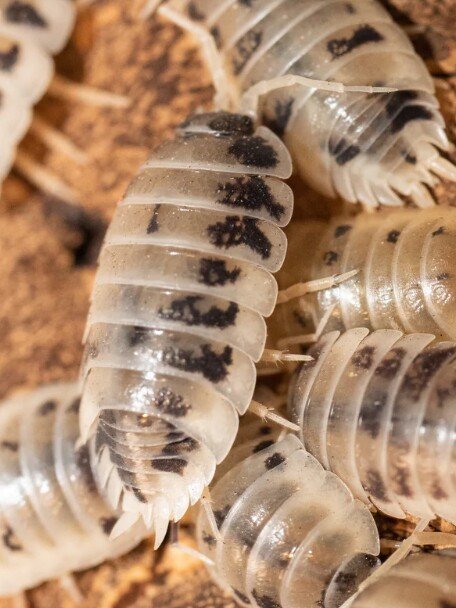
What's the ideal diet for your Zebra Isopods?
We highly recommend feeding this species a balanced diet of vegetables & proteins. Additionally, we suggest adding cuttlebone or crushed eggshells to the enclosure to boost calcium intake. For vegetables, we recommend bok choy, mustard greens, and collard greens, as well as organic butternut squash or any other squash that is readily available. Cucumbers can be given for water only as they are very quick to rot, and mold. One item to note is that isopods themselves do not eat mold, and mold/fungus are naturally occurring in the air, so springtails are a must for all kinds of isopods to keep mold spores to a minimum.
What is the best way to keep and breed your Zebra Isopods?
We highly recommend keeping isopods on Royal Soil, with Cork Round or Cork Flats for cover, along with additional springtails such as Folsomia candida to help keep mold from building up in the enclosure. Maintaining a damp side and a drier side allows your isopods to move between microclimates and hydrate as needed. We do not recommend a water dish, as isopods can easily drown in them. Instead we highly recommend you offer them water crystals or vegetables with high moisture content such as squash to keep them hydrated.
What is the best type of habitat to use Zebra Isopods for bioactive?
This species is notably adaptable, tolerating both arid and temperate bioactive setups without much trouble. In a temperate enclosure, it does well on a standard bioactive substrate with moderate moisture and leaf litter cover, while in a more arid setup it holds up just fine with a well draining substrate blend as long as a damp hide or moisture pocket is available for it to retreat to when needed. This flexibility comes down to a hardy, forgiving nature that doesn't require dialing in a narrow humidity range to thrive, making it a great option for keepers who want a species that can move between drier and more moderate setups, or for anyone still figuring out what conditions work best in their collection.